
UNIT III: Landscaping and Ornamental Gardening
HORMI-101: Garden Plant Components, Specialized Gardens, Structures, and Production Technology for Selected Ornamental Plants.
Table of Contents
1. Garden Plant Components
A. Introduction
Garden plant components refer to the different categories of plants used in landscape design to create structure, aesthetic appeal, and functional utility.
Objectives of Using Plant Components
- Beautification
- Shade and shelter
- Privacy and screening
- Soil conservation
- Microclimate regulation
B. Classification of Garden Plant Components
1. Trees
Definition: Woody perennial plants with a single main trunk and well-developed canopy.
- Functions: Provide shade, act as focal point, used for avenue planting, improve microclimate.
- Types:
- Evergreen Trees: Retain leaves year-round (Example: Ashoka, Neem).
- Deciduous Trees: Shed leaves seasonally (Example: Gulmohar, Amaltas).
- Flowering Trees: Ornamental flowers (Example: Jacaranda, Cassia).
- Selection Criteria: Height & spread, growth rate, climate adaptability, non-invasive roots.
2. Shrubs
Definition: Woody plants with multiple stems, smaller than trees.
- Functions: Border planting, hedges, mass planting.
- Types: Flowering Shrubs (Hibiscus, Bougainvillea), Foliage Shrubs (Crotons, Duranta), Formal Shrubs (used in hedges and topiary).
- Uses: Foundation planting, screening, pathway lining.
3. Climbers and Creepers
Definition: Plants with weak stems requiring support (climbers) or spreading on ground (creepers).
- Types: Climbers need support (Bougainvillea, Jasmine). Creepers spread on ground (Money plant).
- Uses: Cover walls, pergolas, vertical gardening, ground cover.
4. Herbaceous Plants
Definition: Non-woody plants with soft stems.
- Types: Annuals, Biennials, Perennials.
- Examples: Marigold, Petunia, Chrysanthemum.
- Uses: Flower beds, seasonal decoration.
5. Annuals
Definition: Plants completing life cycle in one season/year.
- Types: Winter annuals (Petunia), Summer annuals (Zinnia).
- Uses: Flower beds, borders, seasonal display.
6. Ground Covers
Definition: Low-growing plants that cover soil surface.
- Functions: Prevent soil erosion, weed suppression, decorative carpet effect.
- Examples: Doob grass, Wedelia.
7. Lawns (Turf Grass)
Definition: Area covered with fine grasses forming a green carpet.
- Functions: Aesthetic appeal, recreational use, cooling effect.
- Types: Doob grass, Bermuda grass.
8. Hedges and Edges
- Hedges: Dense shrubs planted in rows. Used for boundary and privacy. (Example: Duranta).
- Edges: Low-growing plants along borders. (Example: Alternanthera).
9. Cacti and Succulents
Definition: Plants adapted to dry conditions.
- Features: Water storage tissues, reduced leaves.
- Uses: Rock gardens, xeriscaping, indoor decoration.
10. Aquatic Plants
Definition: Plants growing in water or wet soil.
- Types: Floating (Water lily), Submerged (Hydrilla), Marginal (Lotus).
- Uses: Water gardens, aesthetic value.
11. Palms and Bamboos
- Palms: Tall, ornamental. Used in avenue planting.
- Bamboos: Fast-growing grasses. Used for screening.
12. Fern and Shade-Loving Plants
Definition: Plants growing under low light.
- Examples: Ferns, Caladium.
- Uses: Indoor gardens, shaded landscapes.
C. Principles of Selection of Plant Components
- Climate adaptability
- Soil suitability
- Growth habit
- Maintenance requirement
- Aesthetic value
- Purpose (shade, hedge, decoration)
D. Functional Use of Plant Components
| Function | Plant Component |
|---|---|
| Shade | Trees |
| Boundary | Hedges |
| Ground cover | Creepers |
| Seasonal color | Annuals |
| Vertical gardening | Climbers |
2. Specialized Gardens
I. Arboretum
Definition: An arboretum is a specialized garden or area where different species of trees and woody plants are collected, grown, studied and displayed systematically for education, research, conservation, and aesthetic purposes.
- Objectives: Conservation of rare tree species, educational and research use, study of taxonomy and adaptation, landscape beautification.
- Characteristics: Trees planted systematically, properly labeled (Botanical name, Family, Origin). Includes both native and exotic species.
- Types:
- Taxonomic Arboretum: Plants arranged according to botanical classification
- Geographic Arboretum: Trees grouped according to region/country
- Ornamental Arboretum: Focus on aesthetic landscape value
- Features: Wide pathways, lawn spaces, irrigation facilities, plant labeling system.
- Advantages
- Biodiversity conservation
- Educational importance
- Recreation and tourism
- Climate improvement
- Examples: National Botanical Research Institute (NBRI) Lucknow, Lalbagh Botanical Garden Bengaluru.
II. Shrubbery
Definition: A shrubbery is an area of the garden where shrubs are planted in groups or masses for ornamental effect.
- Objectives: Beautification, background planting, privacy and screening, softening building lines.
- Characteristics: Combination of flowering and foliage shrubs of different heights and colors arranged harmoniously.
- Principles of Design:
- Height Arrangement: Tall shrubs (back), medium (middle), dwarf (front).
- Color Harmony: Proper combination of foliage and flower colors.
- Seasonal Effect & Spacing: Selection for different seasons; proper spacing prevents overcrowding.
- Types:
- Mixed Shrubbery: Different species planted together
- Single-species Shrubbery: Only one shrub species used
- Formal Shrubbery: Symmetrical arrangement
- Informal Shrubbery: Natural style planting
- Common Shrubs: Flowering (Hibiscus, Bougainvillea, Ixora) and Foliage (Crotons, Acalypha, Duranta).
- Advantages
- Enhances beauty
- Reduces soil erosion
- Creates garden structure
III. Fernery
Definition: A fernery is a specially designed garden or section for growing ferns and shade-loving plants under humid and shaded conditions.
- Characteristics of Ferns: Non-flowering plants, reproduce by spores, prefer shade, moisture, and humidity.
- Requirements: Partial/full shade, high humidity, cool to moderate temperature, soil rich in organic matter.
- Important Features: Artificial shade structures, Moist environment, Good drainage, Water source/misting.
- Common Ferns: Maidenhair fern, Boston fern, Bird’s nest fern.
- Uses: Indoor decoration, Shade gardens and Humid landscape areas
- Advantages
- Creates tropical effect
- Low light adaptability
- Attractive foliage
IV. Palmatum (Palm Garden)
Definition: A palmatum (palmetum) is a specialized garden devoted to the collection, cultivation and display of palms.
- Objectives: Ornamental display, Conservation of palm species, Educational and research purposes
- Characteristics: Tropical appearance, tall elegant plants arranged systematically.
- Requirements: Warm climate, well-drained soil, adequate irrigation, open sunlight.
- Common Palms: Royal Palm (Roystonea regia), Areca Palm (Dypsis lutescens), Date Palm (Phoenix dactylifera), Fan Palm (Livistona chinensis).
- Uses: Avenue planting, Lawn specimen plants, Tropical landscape effect and more
- Advantages:
- Architectural beauty
- Low maintenance
- Suitable for formal landscapes
Difference Between Arboretum, Shrubbery, Fernery and Palmatum
| Feature | Arboretum | Shrubbery | Fernery | Palmatum |
|---|---|---|---|---|
| Main Plants | Trees | Shrubs | Ferns | Palms |
| Purpose | Collection & study | Ornamental grouping | Shade garden | Palm display |
| Environment | Open area | Garden borders | Humid shade | Tropical/open |
| Use | Research & beauty | Landscaping | Decorative foliage | Tropical landscape |
3. Garden Structures
I. Arches

Definition: An arch is a curved or semi-curved garden structure designed to support climbers and create decorative entrances or pathways.
- Objectives: Beautification, vertical gardening, provide focal point, entrance decoration.
- Characteristics: Usually narrow and curved. Made of iron, wood, bamboo, or concrete.
- Placement: Garden entrance, pathways, junction points.
- Suitable Climbers: Bougainvillea (Bougainvillea spectabilis), Climbing Rose (Rosa spp.), Jasmine (Jasminum spp.), Allamanda (Allamanda cathartica).
- Advantages
- Improves garden aesthetics
- Provides vertical flower display
- Saves space
II. Pergolas
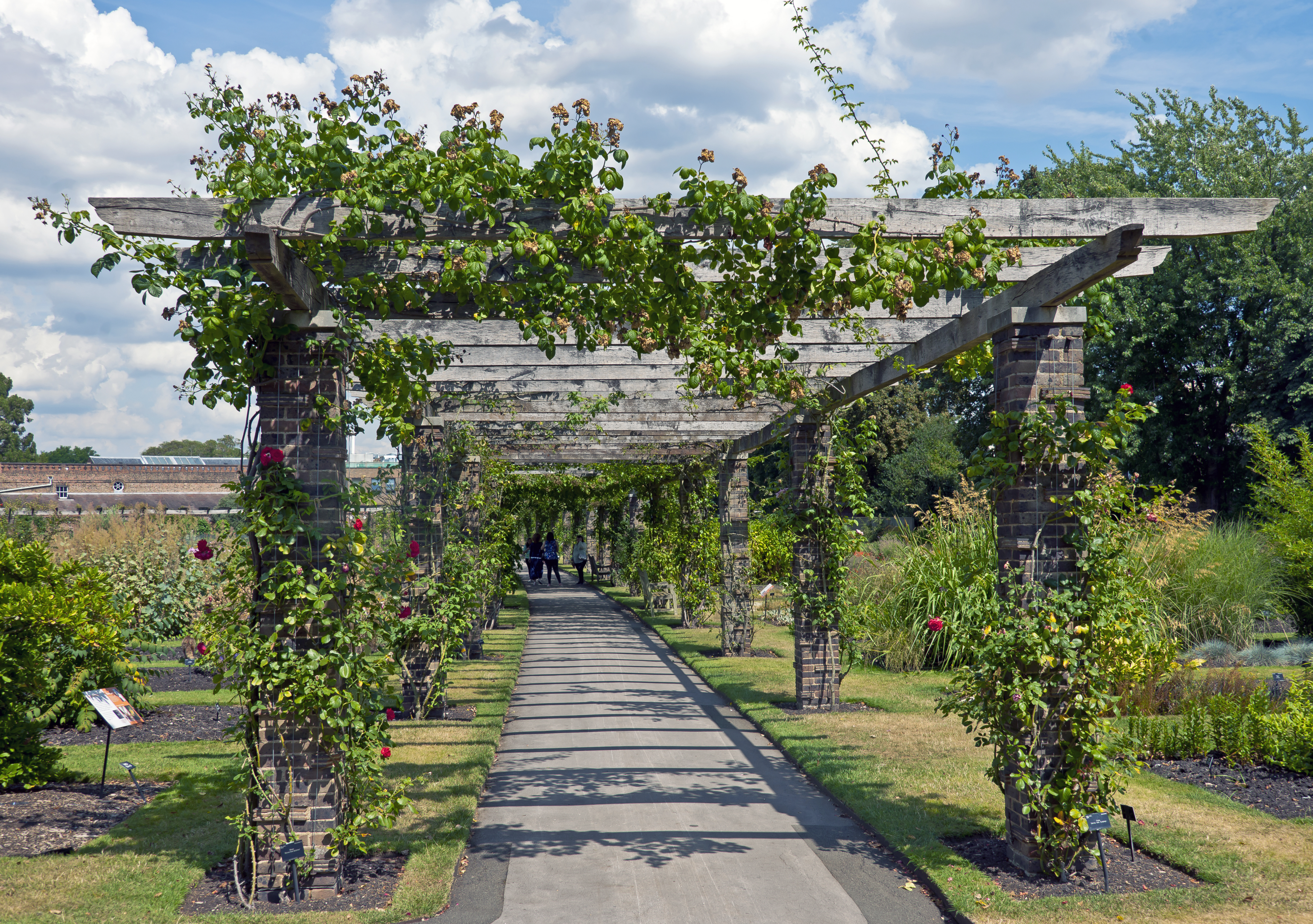
Definition: A pergola is a framework of pillars supporting an open roof structure covered with climbers.
- Features: Consists of pillars/posts and cross beams. Larger than arches with an open roof design. Made of wood, RCC, iron, or bamboo.
- Functions: Shade creation, ornamental feature, resting/sitting place, supports climbers.
- Suitable Plants: Bougainvillea (Flowering climber), Wisteria (Decorative), Rangoon creeper (Fragrant), Grapevine (Shade and fruit).
- Types:
- Flat Pergola: Horizontal roof structure
- Arched Pergola: Curved upper frame
- Tunnel Pergola: Long covered pathway
- Advantages:
- Provides shade
- Enhances landscape beauty
- Reduces the heat effect
- Creates pleasant walkways
Difference Between Arches and Pergolas
| Feature | Arch | Pergola |
|---|---|---|
| Structure | Curved frame | Pillar-supported roof |
| Size | Smaller | Larger |
| Purpose | Entrance decoration | Shaded pathway/sitting |
| Coverage | Limited | Extensive |
4. Boundaries & Borders
I. Hedges

Definition: A hedge is a row of closely planted shrubs or small trees trained and trimmed to form a boundary, fence, or partition.
- Objectives: Privacy, security, wind protection, and beautification.
- Characteristics: Dense foliage, regular pruning required, uniform height and shape.
- Types of Hedges:
- Formal Hedge: Regularly trimmed, symmetrical (Duranta, Murraya).
- Informal Hedge: Natural growth, less pruning (Hibiscus, Bougainvillea).
- Defensive Hedge: Thorny plants used (Agave, Karonda).
- Decorative Hedge: Attractive foliage/flowers (Acalypha, Crotons).
- Ideal Hedge Plants: Dense branching, fast recovery after pruning, evergreen, tolerant to clipping.
- Maintenance: Spacing is 15–45 cm, depending on species. Regular trimming and fertilization post-pruning are essential.
- Advantages
- Defines boundaries
- Reduces noise and dust
- Provides privacy
- Common Hedge Plants: Duranta (Formal), Murraya paniculata (Formal), Bougainvillea (Defensive), Clerodendron (Informal), etc.
II. Edges
:strip_icc()/colorful-garden-path-e4352b63-e5f25b1ef0c9486db05dbe0617f07a84.jpg)
Definition: Edges are low-growing plants planted along paths, flower beds or lawns to define boundaries.
- Objectives: Beautification, separation of garden sections, improve neatness.
- Characteristics: Dwarf and compact plants, Easy to maintain, Uniform growth
- Types:
- Living Edges: Made with plants. Examples: Alternanthera, Alyssum
- Non-Living Edges: Brick, Stone, Tiles
- Ideal Characteristics: Slow-growing, compact habit, attractive foliage or flowers.
- Advantages:
- Defines garden layout
- Prevents soil erosion near paths
- Enhances ornamental value
- Common Edge Plants: Alternanthera (Colored foliage), Alyssum (Flowering), Dwarf marigold (Seasonal edge), etc.
Difference Between Hedge and Edge
| Feature | Hedge | Edge |
|---|---|---|
| Height | Tall | Low |
| Purpose | Boundary/privacy | Border definition |
| Plants Used | Shrubs | Dwarf herbs/shrubs |
| Maintenance | Heavy pruning | Light trimming |
5. Climbers, Creepers, Cacti & Succulents
I. Climbers and Creepers
Definition
Climbers: Plants with weak stems that require support to grow upward.
Creepers: Plants with weak stems that spread along the ground and do not climb naturally.
Characteristics
- Rapid growth
- Ornamental flowers/foliage
- Space-efficient
- Suitable for vertical gardening
Types of Climbers Based on Climbing Habit
- Twiners: Stem twines around support. Examples: Morning glory, Clitoria
- Tendril Climbers: Use tendrils for support. Examples: Passion flower, Grapevine
- Root Climbers: Adventitious roots attach to walls. Examples: Money plant, Ivy
- Hook Climbers: Use hooks or thorns. Examples: Bougainvillea
Uses in Landscaping
- Cover walls and fences
- Decoration of pergolas and arches
- Shade creation
- Vertical gardening
Common Climbers
| Common Name | Botanical Name |
|---|---|
| Bougainvillea | Bougainvillea spectabilis |
| Jasmine | Jasminum spp. |
| Rangoon Creeper | Quisqualis indica |
| Passion Flower | Passiflora spp. |
Common Creepers
| Common Name | Botanical Name |
|---|---|
| Wedelia | Wedelia trilobata |
| Money Plant | Epipremnum aureum |
| Ipomoea | Ipomoea spp. |
Advantages
- Beautify vertical spaces
- Reduce heat on walls
- Prevent soil erosion (creepers)
- Efficient use of limited space
II. Cacti and Succulents

Definition:
Cacti: Succulent plants belonging mainly to the family Cactaceae, adapted to arid conditions.
Succulents: Plants with thick, fleshy tissues for water storage.
- Characteristics: Water storage tissues, reduced leaves/spines, thick cuticle, drought resistant. Adaptations include CAM photosynthesis, Reduced transpiration and an extensive root system.
- Uses: Rock gardens, xeriscaping, indoor decoration, container gardening.
Common Cacti
| Common Name | Botanical Name |
|---|---|
| Barrel Cactus | Echinocactus spp. |
| Prickly Pear | Opuntia spp. |
| Christmas Cactus | Schlumbergera spp. |
Common Succulents
| Common Name | Botanical Name |
|---|---|
| Aloe vera | Aloe barbadensis |
| Agave | Agave americana |
| Jade Plant | Crassula ovata |
Growing Requirements
| Factor | Requirement |
|---|---|
| Light | Bright sunlight |
| Soil | Well-drained sandy soil |
| Water | Minimal watering |
| Humidity | Low |
Advantages
- Low maintenance
- Drought tolerance
- Suitable for dry landscapes
- Attractive architectural forms
Difference Between Cacti and Succulents
| Feature | Cacti | Succulents |
|---|---|---|
| Family | Mostly Cactaceae | Various families |
| Spines | Usually present | May or may not be present |
| Areoles | Present | Absent |
6. Herbs, Annuals & Flower Borders/Beds
I. Herbs
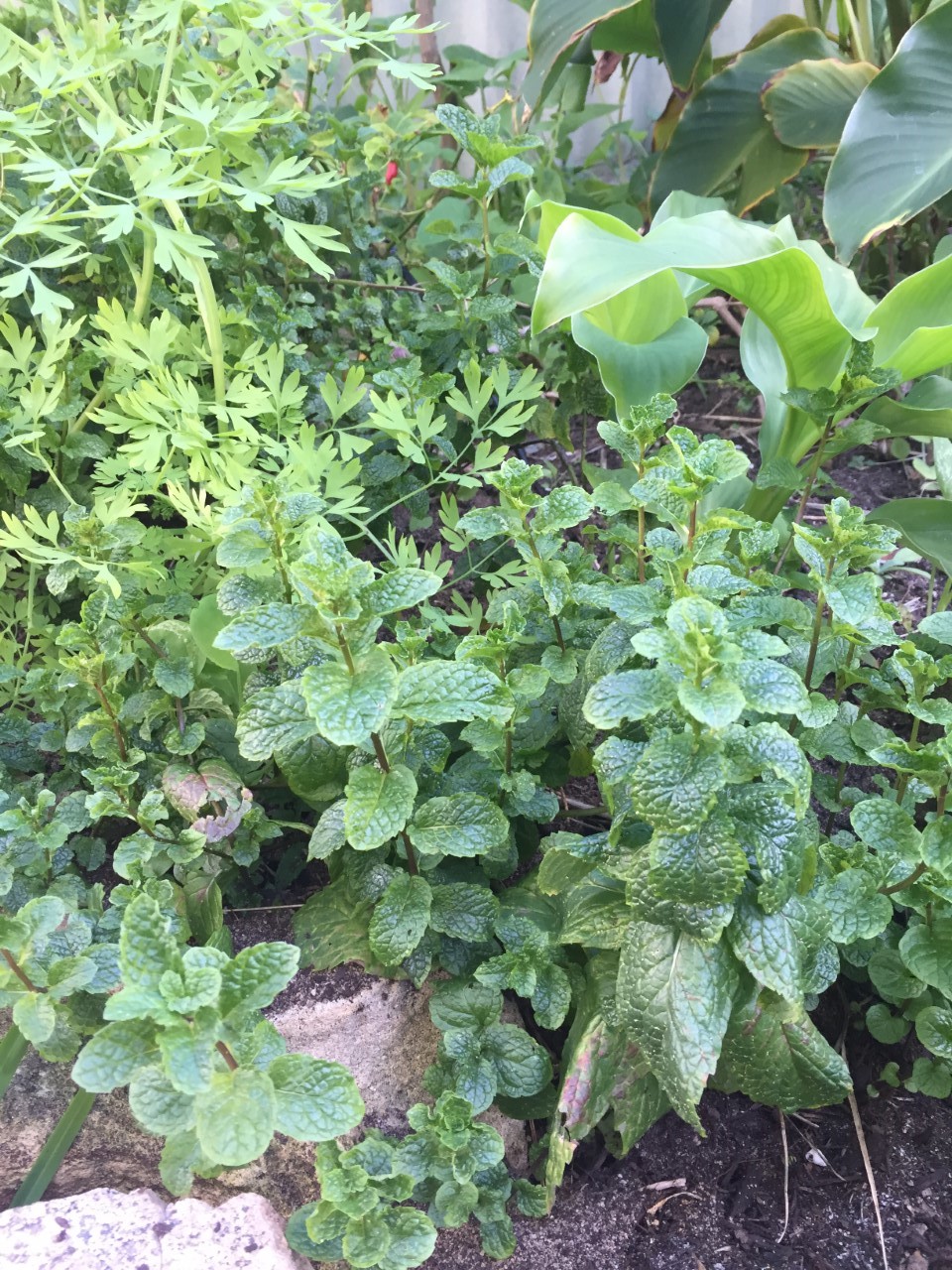
Definition: Herbs are usually soft-stemmed and aromatic plants valued for medicinal use, culinary use, fragrance, and ornamental value.
Characteristics
- Aromatic foliage
- Soft stems
- Easy cultivation
Classification
- Culinary Herbs: Used in cooking. Examples: Basil, Mint, Coriander
- Medicinal Herbs: Used for therapeutic purposes. Examples: Tulsi, Aloe vera
- Ornamental Herbs: Used for decorative value. Examples: Lavender, Rosemary
Uses in Landscaping
- Kitchen gardens
- Fragrant gardens
- Border planting
- Medicinal gardens
Advantages
- Multipurpose use
- Aromatic effect
- Attract pollinators
II. Annuals

Definition: Plants that complete their entire life cycle within one growing season or one year.
Characteristics
- Fast-growing
- Profuse flowering
- Seasonal display
Classification According to Season
- Winter Annuals: Grow in cool season. Examples: Petunia, Pansy, Sweet pea
- Summer Annuals: Grow in warm season. Examples: Zinnia, Sunflower, Portulaca
- Rainy Season Annuals: Suitable for monsoon. Examples: Balsam, Celosia
Classification According to Height
| Type | Height |
|---|---|
| Dwarf | Up to 30 cm |
| Medium | 30–60 cm |
| Tall | Above 60 cm |
Uses in Landscaping
- Flower beds
- Borders
- Hanging baskets
- Pot culture
Advantages
- Seasonal color effect
- Wide range of flower colors
- Easy cultivation
Important Annual Flowers
| Flower | Season |
|---|---|
| Marigold | Winter |
| Petunia | Winter |
| Zinnia | Summer |
| Balsam | Rainy |
III. Flower Borders
:max_bytes(150000):strip_icc()/ms-border-garden-getty-7f1ab0f3fb3f49fd897383ac4dfcb1fe.jpg)
Definition: A long, narrow strip of land planted with flowering plants along paths, walls, lawns, or buildings.
Objectives
- Beautification
- Color harmony
- Framing lawns/pathways
- Seasonal display
Characteristics
- Usually rectangular or curved
- Plants arranged according to: Height, Color, Flowering season
Types of Flower Borders
- Herbaceous Border: Uses perennial herbaceous plants. Examples: Chrysanthemum, Dahlio
- Shrub Border: Uses shrubs only. Examples: Hibiscus, Ixora
- Mixed Border: Combination of: Annuals, Shrubs, Perennials
- Formal Border: Symmetrical design, Geometrical arrangement
- Informal Border: Natural arrangement, Irregular pattern
Principles of Flower Border Design
- Height Arrangement: Tall plants → back, Medium → center, Dwarf → front
- Colour Combination: Harmonious flower colors, Avoid clashing colors
- Succession of Blooming: Continuous flowering throughout the season
- Proper Spacing: Avoid overcrowding
Common Plants Used
| Tall Plants | Medium Plants | Dwarf Plants |
|---|---|---|
| Hollyhock | Salvia | Alyssum |
| Sunflower | Marigold | Pansy |
Advantages
- Increases garden beauty
- Provides continuous flowering
- Enhances landscape structure
IV. Flower Beds

Definition: A defined area planted with flowering plants for mass display.
Objectives
- Attractive floral display
- Focal point in garden
- Seasonal decoration
Types of Flower Beds
- Formal Flower Bed: Geometrical shapes: Circular, Rectangular, Square
- Informal Flower Bed: Irregular natural design
- Carpet Bed: Special flower bed with dwarf colorful foliage plants forming patterns/designs
- Island Bed: Flower bed visible from all sides
- Raised Bed: Elevated above ground level
Principles of Bed Design
- Proper color contrast
- Symmetry in formal beds
- Good drainage
- Easy maintenance
Common Bedding Plants
- Petunia
- Marigold
- Salvia
- Zinnia
Advantages
- Seasonal ornamental effect
- Attractive garden focal point
Difference Between Flower Border and Flower Bed
| Feature | Flower Border | Flower Bed |
|---|---|---|
| Shape | Long narrow strip | Defined area |
| Placement | Along edges/pathways | Anywhere in garden |
| Visibility | Usually from one side | Often from all sides |
7. Ground Covers, Carpet Beds & Bamboo Groves
I. Ground Covers

Definition: Low-growing, spreading plants used to cover the soil surface.
Objectives
- Prevent soil erosion
- Weed suppression
- Beautification
- Moisture conservation
Characteristics
- Dense growth
- Fast spreading habit
- Low maintenance
Ideal Characteristics
- Drought tolerance
- Pest resistance
- Attractive foliage/flowers
Types of Ground Covers
- Herbaceous Ground Covers: Soft-stemmed plants. Examples: Wedelia, Alternanthera
- Woody Ground Covers: Semi-woody plants. Examples: Lantana dwarf varieties
- Grass Ground Covers: Turf grasses. Examples: Bermuda grass
Uses
- Slopes and embankments
- Under trees
- Lawn substitutes
Common Ground Cover Plants
| Plant | Special Feature |
|---|---|
| Wedelia | Fast spreading |
| Alternanthera | Colored foliage |
| Portulaca | Drought tolerant |
Advantages
- Reduces weed growth
- Prevents erosion
- Reduces soil temperature
II. Carpet Beds
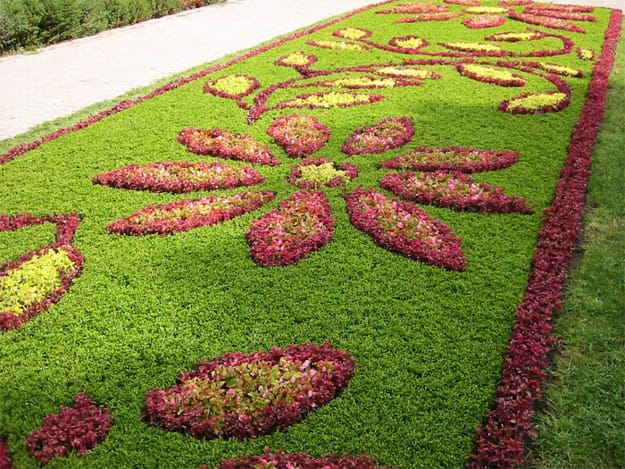
Definition: A decorative flower bed created using dwarf foliage plants arranged in patterns resembling a carpet.
Characteristics
- Geometrical designs
- Colour contrast using foliage plants
- Low-growing compact plants
Objectives
- Ornamental display
- Artistic garden design
- Formal landscaping
Common Designs
- Circular patterns
- Floral motifs
- Geometrical shapes
- Lettering designs
Plants Used
| Plant | Feature |
|---|---|
| Alternanthera | Colored foliage |
| Iresine | Red foliage |
| Kochia | Compact growth |
Requirements
- Regular trimming
- Proper spacing
- Frequent maintenance
Advantages
- Highly decorative
- Creates artistic effect
- Ideal for formal gardens
III. Bamboo Groves

Definition: A plantation or grouping of bamboo species used in landscaping for ornamental and functional purposes.
Characteristics
- Fast-growing perennial grass
- Tall, hollow culms
- Evergreen nature
Objectives
- Screening and privacy
- Windbreaks
- Tropical landscape effect
- Soil conservation
Types of Bamboo
- Clumping Bamboo: Grows in compact clumps, Less invasive. Example: Bambusa spp.
- Running Bamboo: Spreads rapidly through rhizomes, Requires control
Uses in Landscaping
- Avenue planting
- Background planting
- Water garden landscaping
- Zen gardens
Important Species
| Common Name | Botanical Name |
|---|---|
| Golden Bamboo | Bambusa vulgaris |
| Buddha Belly Bamboo | Bambusa ventricosa |
Advantages
- Fast growth
- Noise reduction
- Eco-friendly material
- Carbon sequestration
8. Production Technology for Selected Ornamental Plants
A. INTRODUCTION
Definition
Production technology of ornamental plants includes the scientific methods and cultural practices used for:
- Propagation
- Cultivation
- Nutrition
- Irrigation
- Plant protection
- Harvesting and post-harvest management
of ornamental crops for commercial and landscape purposes.
B. OBJECTIVES OF ORNAMENTAL PLANT PRODUCTION
- Production of high-quality flowers and foliage
- Year-round flower availability
- Improvement in aesthetic value
- Commercial floriculture development
- Export-quality flower production
C. GENERAL REQUIREMENTS FOR ORNAMENTAL PLANT PRODUCTION
| Factor | Requirement |
|---|---|
| Climate | Crop-specific |
| Soil | Fertile, well-drained |
| pH | 6.0–7.5 generally |
| Irrigation | Regular but not excessive |
| Sunlight | Full sun/partial shade depending on crop |
D. PRODUCTION TECHNOLOGY OF IMPORTANT ORNAMENTAL PLANTS
1. ROSE (Rosa spp.)
- Importance: Most important cut flower
- Used for: Landscaping, Perfume, Loose flowers
- Climate: Mild climate ideal
- Temperature: 15–28°C optimal
- Soil: Well-drained loam soil
- pH: 6.0–7.5
- Propagation
- Budding (T-budding)
- Stem cuttings
- Planting: Spacing is 60 × 60 cm generally
- Manures and Fertilizers
- FYM: 8–10 kg/plant/year
- NPK applied regularly
- Irrigation: Weekly during summer and Avoid waterlogging
- Special Practices
- Pruning essential for flowering
- Disbudding in hybrid tea roses
- Harvesting: Tight bud stage for cut flowers
- Yield: About 100–200 flowers/plant/year depending on type
2. CHRYSANTHEMUM (Chrysanthemum morifolium)
- Climate: Cool season crop. Ideal temperature: 15–20°C
- Propagation: Terminal cuttings, Suckers
- Planting Time: Rainy season to early winter
- Spacing: 30 × 30 cm
- Special Operations: Pinching → promotes branching, Disbudding → large flowers
- Uses: Cut flowers, Pot plants, Loose flowers
3. MARIGOLD (Tagetes spp.)
- Importance: Loose flower crop, Garland making, Bedding plant
- Climate: Warm climate preferred. Temperature: 18–30°C
- Propagation: Seeds
- Planting:
Type Spacing African marigold 45 × 45 cm French marigold 30 × 30 cm - Special Practices: Pinching improves branching
- Flowering: Starts 60–70 days after transplanting
- Yield: 8–12 t/ha flowers
4. TUBEROSE (Polianthes tuberosa / Agave amica)
- Importance: Highly fragrant flowers, Cut flower and loose flower
- Climate: Warm humid climate
- Propagation: Bulbs
- Planting Time: February–March or July
- Spacing: 30 × 20 cm
- Irrigation: Regular irrigation required
- Harvesting: Spikes harvested when 1–2 flowers open
5. GLADIOLUS (Gladiolus grandiflorus)
- Importance: Popular cut flower
- Climate: Mild climate, Cool growing conditions preferred
- Propagation: Corms and cormels
- Spacing: 30 × 20 cm
- Special Practices: Staking required, Earthing up improves support
- Harvesting: Spike harvested when basal florets show color
6. JASMINE (Jasminum spp.)
- Importance: Fragrant flowers. Used for: Garland, Perfume, Religious purposes
- Climate: Warm tropical climate
- Propagation: Stem cuttings, Layering
- Spacing: 1.5 × 1.5 m
- Special Practices: Annual pruning improves flowering
E. COMMON CULTURAL PRACTICES
- Irrigation: Regular but controlled, Avoid waterlogging
- Nutrient Management: FYM + balanced NPK, Micronutrient spray if deficient
- Weed Management: Hand weeding, Mulching
- Plant Protection: Control: Aphids, Thrips, Mites, Fungal diseases
- Growth Regulators: GA₃ → stem elongation, CCC → dwarfing
F. POST-HARVEST MANAGEMENT
- Grading
- Precooling
- Packaging
- Cold storage
G. PROTECTED CULTIVATION IN ORNAMENTALS
- Used for: Rose, Gerbera, Carnation
- Advantages: Better quality, Off-season production, Export flowers
9. Important Exam Points (Revision)
- Garden plants = living components of the landscape
- Trees → structure & shade
- Shrubs → borders & hedges
- Arboretum = collection of trees
- Shrubbery = ornamental shrub plantation
- Fernery = shaded fern garden
- Palmatum = palm collection garden
- Ferns reproduce by spores
- Shrubbery requires height arrangement
- Arboretum important for conservation & education
- Arch = curved climber support
- Pergola = shaded framework with pillars
- Hedge = dense shrub boundary
- Edge = low border planting
- Formal hedge requires regular clipping
- Pergolas create shaded walkways
- Defensive hedges use thorny plants
- Climbers require support; creepers spread on the ground
- Bougainvillea = hook climber
- Cacti adapted to xerophytic conditions
- Cacti → dry areas
- Succulents store water in tissues
- Herbs are aromatic and multipurpose
- Annuals complete their life cycle in one season
- Flower border = long narrow flowering strip
- Flower bed = mass floral planting area
- Ground covers prevent soil erosion
- Carpet beds use dwarf colorful foliage plants
- Bamboo groves create tropical effect
- Alternanthera important for carpet bedding
- Rose propagated mainly by budding
- Chrysanthemum requires pinching
- Marigold propagated through seeds
- Tuberose propagated by bulbs
- Gladiolus propagated through corms
- Jasmine requires annual pruning
Sources: Bose & Mukherjee (Gardening in India), Randhawa, G.S., ICAR publications, and NHB Floriculture Guidelines.
If you have any doubts or questions about the notes, join our Telegram community @agricorn to get your queries solved, connect with fellow students, and access additional study materials. For PDF notes, feel free to DM me on Instagram.