
Landscaping and Ornamental Gardening
Master the aesthetic and functional principles of ornamental gardening. From the manicured geometry of Mughal designs to the serene minimalism of Japanese gardens, explore the foundational concepts of modern landscape architecture.
Syllabus
Objective
Familiarization with principles and practices of propagation and nursery management for fruit crops.
Theory of UNIT - I
Landscape designs, types of gardens, English, Mughal, Japanese, Persian, Spanish, Italian, Vanams, Buddha gardens; Styles of the garden, formal, informal and freestyle gardens.
Landscape designs
Landscape Design is the art of arranging and modifying features of a space to create an aesthetically pleasing, functional, and sustainable environment. It involves both natural elements (plants, water, landforms) and man-made elements (structures, pathways, furniture). The key to successful landscape design is creating a balance between these elements while addressing the needs of the site and the users.
1. Principles of Landscape Design
The principles of landscape design are fundamental guidelines that ensure the space is well-organized, harmonious, and functional. These include:
- a. Unity
Unity refers to the cohesiveness of the design. All landscape elements should work together to create a consistent theme or style.
Repetition of elements such as plants, materials, and forms helps achieve unity.
Too much diversity without a unifying factor can make a design appear chaotic. - b. Balance
Balance in landscape design is the visual equilibrium between different parts of the landscape.
Symmetrical balance: Both sides of the landscape mirror each other. This is often seen in formal gardens.
Asymmetrical balance: Achieved through the arrangement of differing elements with equal visual weight. - c. Proportion
Proportion refers to the size relationship between landscape elements.
Large trees, for instance, should not overpower small shrubs or beds.
The landscape should be scaled according to the surrounding environment and the users of the space. - d. Focalization (Focal Points)
Focal points draw attention to certain areas of the landscape.
This can be achieved using a large tree, a sculpture, or a water feature.
It provides a sense of direction and visual interest. - e. Rhythm and Line
Rhythm involves creating movement in the landscape by repeating elements like plants or pathways at regular intervals.
Lines are created by walkways, garden beds, and boundaries that guide the eye and movement through the landscape. - f. Simplicity
Simplicity means avoiding over-complication by using a few well-chosen elements.
A simple design can still be elegant and visually pleasing, making it easier to maintain. - g. Texture and Color
Texture refers to the surface quality of the landscape elements (coarse, medium, fine textures). For instance, the bark of a tree, the leaves of plants, and the material of hardscapes all have different textures.
Color is used to create mood and visual interest. Cool colors (blues, greens) create a calm atmosphere, while warm colors (reds, yellows) add energy. Color schemes should be planned according to seasonal changes.
2. Types of Landscape Designs
- a. Formal Landscape Design
A formal landscape follows symmetrical designs, straight lines, and structured patterns.
It often includes manicured lawns, symmetrical beds, and pruned shrubs.
Features include fountains, statues, and pathways arranged in geometric shapes. - b. Informal Landscape Design
Informal design focuses on natural, flowing forms with irregular planting arrangements.
Curved lines and asymmetrical layouts mimic nature's randomness.
Native plants and informal groupings of shrubs and trees are common in this design. - c. Modern Landscape Design
Modern landscapes emphasize clean lines, minimalism, and functionality.
Hardscaping (concrete, metal, glass) plays a significant role.
Plantings are often minimal, focusing on structural and low-maintenance species. - d. Cottage Garden Design
Cottage gardens are known for their informal, lush appearance, full of colorful flowers, herbs, and vegetables.
This design style emphasizes charm, color, and texture in a compact space, often with winding paths and natural materials. - e. Xeriscape Design
Xeriscaping focuses on water conservation and uses drought-tolerant plants, often native to the area.
It incorporates techniques like mulching, grouping plants based on water needs, and minimizing lawn areas.
Ideal for arid regions, xeriscaping promotes sustainable gardening. - f. Japanese Garden Design
Japanese gardens emphasize serenity, simplicity, and natural elements.
They use water features, rocks, bridges, and carefully pruned plants to create peaceful, meditative spaces.
The designs often follow the principles of "borrowed scenery," incorporating the natural surroundings into the garden.
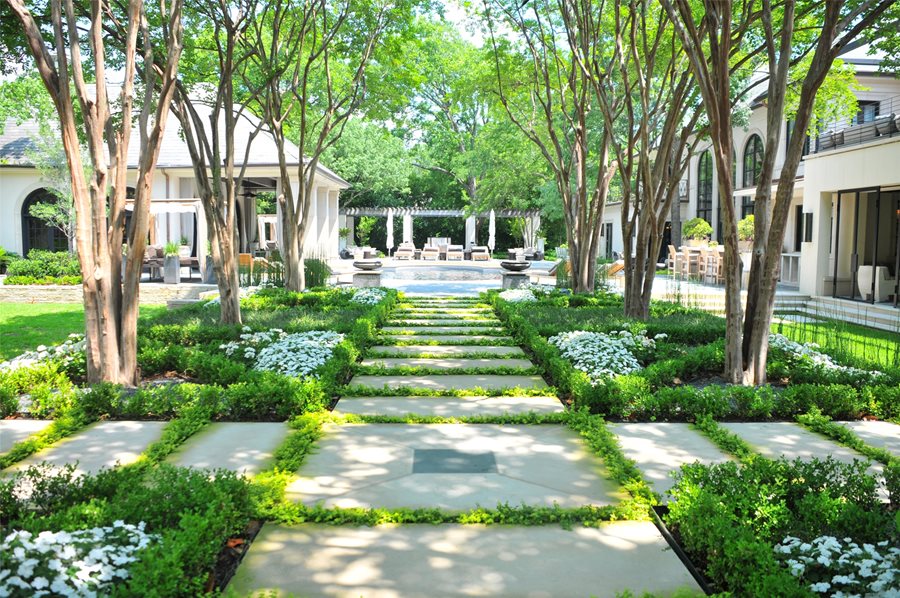
3. Elements of Landscape Design
These are the building blocks that every landscape designer works with:
- a. Plants
Trees, shrubs, groundcovers, and flowers are the key living elements of the landscape.
Choosing the right plants for the climate, soil, and light conditions is crucial for the landscape's success.
Plants provide shade, structure, color, and seasonal interest. - b. Water Features
Water elements like ponds, fountains, and streams add tranquility and a sense of movement to the landscape.
These features often act as focal points and can help cool the environment. - c. Hardscaping
This includes non-plant elements such as pathways, patios, walls, and furniture.
Hardscaping defines the physical structure of the landscape and creates spaces for activities. - d. Lighting
Lighting is essential for safety, security, and creating ambiance.
It highlights focal points, enhances nighttime views, and extends the usability of the landscape into the evening. - e. Structures
Pergolas, gazebos, fences, and garden benches provide shade, shelter, and additional seating, enhancing both the aesthetic and functional value of the space.
4. Sustainable Landscape Design
With a focus on environmental responsibility, sustainable landscape design seeks to minimize environmental impact by:
- Water conservation: Using efficient irrigation systems, rainwater harvesting, and drought-tolerant plants.
- Energy efficiency: Planting trees to provide shade in summer and windbreaks in winter, reducing energy use.
- Use of native plants: Native species require less maintenance and are better adapted to the local environment.
- Soil health: Composting and mulching to improve soil structure and fertility.
- Waste reduction: Reusing materials and reducing plant waste through proper pruning and maintenance.
5. Steps in Landscape Design Process
The process of creating a landscape design involves several stages:
- a. Site Analysis
Assess the site's topography, soil type, climate, water sources, and existing vegetation.
Understand the needs of the client, such as preferred plant types, budget, and usage patterns. - b. Conceptual Design
Sketch preliminary layouts that include the major elements like lawns, planting areas, water features, and pathways.
Consider the views, sun exposure, and drainage patterns. - c. Design Development
Develop detailed plans, including plant species selection, hardscape materials, and lighting placement.
Make adjustments to balance aesthetic, functional, and environmental considerations. - d. Installation and Maintenance
Once the design is finalized, the installation begins, often in phases.
Maintenance plans ensure the landscape matures beautifully and sustainably over time.
Types of Gardens
1. English Garden (English Landscape Garden)
The English Garden is known for its natural, informal design that seeks to mimic the beauty of the natural landscape.
Features:
- Informality: Unlike the formal and symmetrical gardens of other European traditions, the English garden features irregularly placed plants, winding paths, and a lack of rigid structure.
- Large Lawns: Open grassy areas are an important part of the design, often surrounded by groves of trees.
- Lakes and Water Features: Artificial lakes, ponds, and streams are common, blending with the natural topography.
- Follies: Decorative buildings or ruins, such as temples, grottoes, and bridges, are used as focal points.
- Flowerbeds: Brightly colored flower beds arranged in irregular, informal patterns. Flowers like roses, foxgloves, and lavender are typical.
- Ha-Ha: A sunken wall or trench that serves as a barrier for livestock without obstructing views of the landscape.
Examples:
Stourhead, Wiltshire
Kew Gardens, London
2. Mughal Garden
The Mughal Garden style is a formal garden design introduced by the Mughal emperors in India, influenced by Persian and Islamic garden traditions.
Features:
- Charbagh (Four-Part Garden): The layout is based on the quadripartite design, with water channels dividing the garden into four parts, symbolizing the four rivers of paradise in Islamic tradition.
- Symmetry: Strong emphasis on geometric and symmetrical layouts with formal pathways.
- Water Features: Central to Mughal gardens, these include fountains, pools, and canals. Water represents life, purity, and tranquillity.
- Terraces: Gardens often feature terraces, especially in sloped areas, to enhance the visual drama.
- Floral Displays: Flowers such as roses, jasmine, and marigolds are common, along with fruit trees.
- Pavilions and Chabutras: Shaded areas and platforms (chabutras) for sitting and relaxing in the garden are important design elements.
Examples:
Shalimar Bagh, Srinagar
Taj Mahal Gardens, Agra
Rashtrapati Bhavan Gardens, New Delhi
3. Japanese Garden
Japanese Gardens are highly stylized landscapes designed to evoke a natural scene, aiming to promote meditation and contemplation.
Features:
- Simplicity and Minimalism: Japanese gardens prioritize simplicity, often using fewer plants and materials to create a peaceful environment.
- Water and Rock Elements: Ponds, streams, waterfalls, and rock formations are integral parts of Japanese garden design, representing nature in miniature.
- Zen Gardens (Karesansui): These dry gardens use gravel and rocks to represent water and landscapes. Raked gravel symbolizes ripples on the water.
- Plants: Trees like maples, pines, and cherry blossoms are carefully pruned to evoke natural beauty. Moss, bamboo, and ferns are also common.
- Bridges and Pathways: Curved bridges, stepping stones, and winding pathways are used to guide movement and create contemplation points.
- Tea Houses and Pavilions: These structures are often placed within the garden, embodying harmony and tranquility.
Examples:
Ryoan-ji Temple Garden, Kyoto
Kenrokuen Garden, Kanazawa
4. Persian Garden
Persian Gardens are some of the oldest formal gardens in history, with designs centered around the concept of paradise and the harmony between man and nature.
Features:
- Chahar Bagh (Four Gardens): A central watercourse divides the garden into four symmetrical sections, reflecting the Islamic paradise garden.
- Water Features: Water is a primary element, with pools, fountains, and canals bringing a cooling effect in the arid Persian climate.
- High Walls: Gardens are enclosed by high walls, creating an intimate, inward-facing space that shuts out the harsh outside environment.
- Plantings: Trees like cypress and fruit-bearing plants such as pomegranates and citrus trees are common, symbolizing life and fertility.
- Pavilions: Gardens often feature pavilions or palaces at the center or along the edges to provide shade and enjoyment.
Examples:
Shazdeh Garden, Mahan
Fin Garden, Kashan
5. Spanish Garden
Spanish Gardens combine Moorish and Renaissance influences, designed for outdoor living and featuring strong Islamic influences from the time of the Moors in Spain.
Features:
- Moorish Influence: Water features and geometric layouts reflect the Islamic influence, with fountains, pools, and rills used to cool the garden.
- Courtyards (Patio): The garden is often centered around a courtyard, creating intimate outdoor spaces for relaxation.
- Tiled Walkways and Walls: Brightly colored ceramic tiles and mosaics are frequently used to decorate fountains, walls, and walkways.
- Mediterranean Plants: Olive trees, citrus, lavender, and rosemary are typical plants, along with drought-resistant varieties.
- Shade and Shelter: Pergolas and shaded areas provide relief from the hot climate, and there is a focus on outdoor seating and dining areas.
Examples:
Alhambra Gardens, Granada
Generalife Gardens, Granada
6. Italian Garden (Renaissance Garden)
Italian Gardens are characterized by their formal structure, symmetry, and classical design elements, reflecting Renaissance ideals of order and beauty.
Features:
- Terracing: Italian gardens are often built on sloped terrain, with terraces linked by stairs and ramps.
- Formal Layout: Symmetry and geometric patterns are key, with precisely arranged flower beds, clipped hedges, and statuary.
- Fountains and Water Features: Large, ornate fountains are a focal point, often integrated with sculptures and architectural elements.
- Sculptures and Statues: Classical statues and mythological figures adorn the garden, reflecting the influence of ancient Roman art.
- Topiary and Parterres: Boxwood hedges are trimmed into precise shapes, and parterres (formal garden beds) are designed in intricate patterns.
Examples:
Villa d'Este, Tivoli
Boboli Gardens, Florence
7. Vanams (Indian Sacred Groves)
Vanams, or sacred groves, are ancient gardens in India that hold religious and ecological significance. These natural areas are protected for their association with deities, spirits, or sacred rituals.
Features:
- Sacred Trees and Plants: Certain trees like the peepal (Ficus religiosa) and neem are considered sacred and protected.
- Biodiversity: Vanams are rich in native plant species and provide refuge for wildlife, fostering biodiversity.
- Ritual Space: These groves often contain shrines or altars where local communities perform rituals, offer prayers, and make offerings.
- Conservation Ethic: Vanams embody the traditional Indian concept of nature conservation and are often untouched by modern agricultural or developmental practices.
Examples:
Sacred Groves in Tamil Nadu and Kerala
8. Buddha Garden (Buddhist Garden)
Buddha Gardens are designed to reflect the peaceful and contemplative nature of Buddhism, often serving as a place for meditation and spiritual practice.
Features:
- Serenity and Simplicity: The design emphasizes simplicity and tranquility, using minimal elements to create a sense of peace.
- Water and Stone: Water features like ponds or reflective pools are paired with rocks and gravel, symbolizing purity and eternity.
- Buddhist Statues: Statues of the Buddha or bodhisattvas are often the focal point of these gardens, placed in peaceful surroundings.
- Meditation Spaces: The garden includes areas for quiet reflection and meditation, such as platforms or open lawns.
- Symbolic Plants: Sacred plants like the Bodhi tree (Ficus religiosa), associated with the Buddha’s enlightenment, are often planted.
Examples:
Buddha Jayanti Park, New Delhi
Buddhist Temple Gardens, Kyoto (associated with Zen Buddhism)
Styles of Gardens
The styles of gardens are broadly classified into three main categories: Formal, Informal, and Freestyle gardens. Each of these garden styles emphasizes different principles of design and aesthetics, with varying approaches to symmetry, plant arrangement, and structure. Here’s a detailed look at each style:
1. Formal Gardens
Formal gardens are highly structured and emphasize symmetry, order, and balance. These gardens follow geometric shapes and often have well-maintained, clearly defined spaces. The layout is designed to create a sense of harmony and control over nature.
Key Features:
- Symmetry: Formal gardens are defined by symmetry, with balanced, mirror-image layouts. Paths, beds, and plantings are arranged in orderly patterns.
- Geometric Shapes: Gardens are often laid out in squares, rectangles, circles, or other geometric forms, with straight or precise curves in walkways and plant beds.
- Neatly Clipped Hedges: Topiary (clipped plants shaped into forms) and hedges are essential in formal gardens. Shrubs and trees are trimmed to maintain their shapes.
- Axes and Focal Points: Formal gardens often feature a central axis (a main path or visual line) that leads to a focal point like a fountain, statue, or building. Smaller paths and features radiate symmetrically from this central axis.
- Borders and Parterres: Flowerbeds, known as parterres, are carefully designed in intricate, symmetrical patterns. The borders between lawns and flower beds are sharply defined.
- Structured Water Features: Fountains, reflecting pools, and canals often have rigid shapes and are arranged to enhance the garden’s symmetry and formality.
Examples:
French Gardens: The gardens at the Palace of Versailles, with their strict symmetry, topiary, and elaborate parterres, are iconic examples of formal gardens.
Italian Renaissance Gardens: These feature terraced landscapes, statues, and geometric designs.
Suitable For:
Gardens around palaces, public buildings, and mansions.
Urban settings where space is limited and control over nature is desired.
2. Informal Gardens
In contrast to formal gardens, informal gardens focus on a more natural, relaxed, and free-flowing layout. These gardens attempt to mimic nature and create a more organic, softer environment where plants grow in naturalistic patterns.
Key Features:
- Natural Shapes: Informal gardens use curving, flowing lines for paths, beds, and water features. There is little to no symmetry in the layout.
- Asymmetry: Unlike formal gardens, informal gardens embrace asymmetry. There are no rigid geometric patterns or mirrored layouts.
- Natural Planting: Plants are allowed to grow in a more natural fashion. Shrubs, trees, and flowers are often grouped in a way that resembles their natural habitats. There’s no heavy pruning or control over their shapes.
- Winding Paths: Paths are often curving and meander through the garden, encouraging exploration. Materials like gravel, bark, or stepping stones add to the natural feel.
- Irregular Water Features: Ponds, streams, and waterfalls in informal gardens are designed to look natural, often irregularly shaped to mimic real bodies of water.
- Wildflower Meadows: Informal gardens might include meadows of wildflowers, grassy areas, and unstructured plantings that give a sense of wilderness.
- Cottage Gardens: This type of informal garden is densely planted with a mix of ornamental plants, herbs, and vegetables, often spilling over paths and borders.
Examples:
English Cottage Gardens: Known for their abundance of flowers and informal planting styles.
Naturalistic Gardens: Gardens that aim to replicate natural habitats like woodlands, prairies, or meadows.
Suitable For:
Larger rural settings, such as country homes or gardens with access to natural surroundings.
People who prefer a low-maintenance, natural look.
3. Freestyle Gardens (Mixed Gardens)
Freestyle gardens blend elements of both formal and informal styles, allowing for creativity and flexibility in design. They are less rigid than formal gardens but maintain more structure than completely informal layouts.
Key Features:
- Flexible Design: There is no strict adherence to either formality or informality, allowing designers and gardeners to blend various elements according to their preferences.
- Mixed Planting: Freestyle gardens may combine structured hedges or paths with more natural-looking plant groupings. A formal central area might be surrounded by informal planting.
- Balance: While not symmetrical, these gardens achieve a balance between structure and freedom. The design might include formal sections (such as a parterre or a topiary area) alongside more relaxed, flowing sections.
- Combination of Elements: Freestyle gardens can feature a mix of straight paths and winding trails, as well as a variety of plant species, including those common to both formal and informal styles.
- Eclectic Plant Choices: There is more freedom in plant selection, often mixing exotic and native species, combining neat rows with casual, natural plantings.
- Focal Points: Like formal gardens, freestyle gardens may include focal points like statues or fountains, but they are often less rigidly placed.
Examples:
Modern Eclectic Gardens: Contemporary gardens that combine traditional design principles with naturalistic elements.
Transition Gardens: Freestyle gardens often act as a transition between highly formal front areas (e.g., near a house) and more natural surroundings in the back or farther from the central garden.
Suitable For:
Home gardens where owners want structure without being overly formal.
Gardens in suburban or semi-rural settings where nature and human design blend.
Summary of Styles:
- Formal Gardens: Symmetrical, geometric, controlled, and structured.
- Informal Gardens: Asymmetrical, naturalistic, relaxed, and free-flowing.
- Freestyle Gardens: A combination of formal and informal elements, allowing for flexibility and creativity.
Each of these garden styles offers distinct aesthetic qualities and appeals to different tastes and environmental settings. The choice of garden style depends on the desired atmosphere, the surrounding environment, and the cultural influences of the region.