
UNIT II: Seed & Vegetative Propagation Management
Mastering the physiological, anatomical, and biochemical aspects of plant propagation. From ISTA seed certification standards to the exact cellular mechanics of root induction in hard-to-root cuttings.
Table of Contents
1. Seed Quality, Treatment, Packing, Storage, Certification, and Testing
Sexual propagation is crucial for developing rootstocks, breeding new varieties, and propagating polyembryonic species (like citrus and mango).
A. Seed Quality
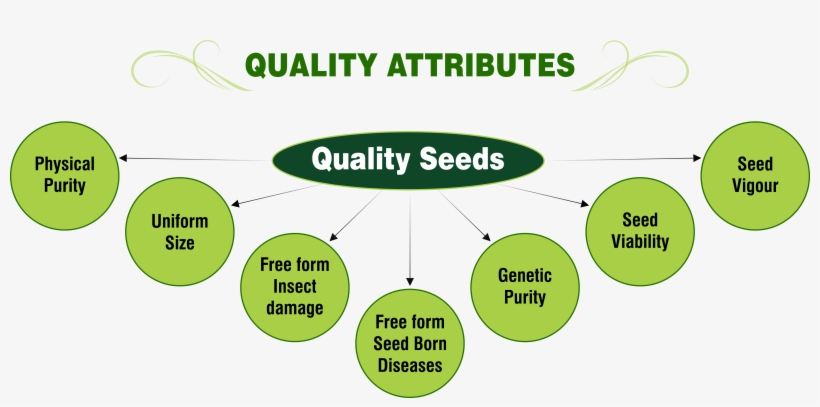
High-quality seed is the baseline for nursery success. It must possess:
- Genetic Purity: True-to-type to its specific variety/species.
- Physical Purity: Free from weed seeds, stones, dirt, and inert matter.
- Viability & Vigor: High germination percentage and the ability to produce robust, uniform seedlings under field conditions.
- Health: Free from seed-borne pathogens (e.g., viruses) and insect pests.
• Physical Purity: Must be >98%. Free from weed seeds, debris, and Other Crop Seeds (OCS).
• Genetic Purity: Must be 100% true-to-type, verified by "Grow-Out Tests" (GOT).
• Seed Vigor vs. Viability: Viability means the seed is alive. Vigor means the seed can germinate rapidly under sub-optimal field conditions. A seed can be viable but lack vigor.
B. Seed Treatment
Treatments are applied to break dormancy, accelerate germination, and prevent diseases.
- Scarification (Hard Seed Coats): Softening or breaching the physical seed coat to allow water/oxygen entry.
- Acid Scarification: Seeds of Ber (Ziziphus mauritiana) are soaked in commercial Sulphuric acid (H2SO4) for 5-6 minutes to dissolve the waxy cuticle, then washed thoroughly.
- Hot Water Treatment: Soaking in water at 70°C-80°C for 24 hours to soften the coat (e.g., Guava).
- Mechanical: Sandpapering or cracking (e.g., Peach, Walnut).
- Stratification (Internal Dormancy): Overcoming embryo dormancy by providing specific chilling requirements in a moist medium.
- Cold Stratification: Chilling at 2°C to 7°C under moist conditions (using sand or peat moss) for 60-120 days. This process decreases Abscisic Acid (ABA - an inhibitor) and increases Gibberellic Acid (GA3 - a promoter). Required for Apple, Pear, Peach.
- Warm Stratification: Kept at 20°C-25°C for a few weeks before cold stratification (required for some rootstocks to allow the immature embryo to finish developing).
- Chemical Treatments:
- PGR Treatment: Soaking in Gibberellic Acid (GA3) at 200-500 ppm or Potassium Nitrate (KNO3) to stimulate embryo growth.
- Osmopriming: Soaking seeds in Polyethylene Glycol (PEG) or Thiourea (1%) to initiate pregerminative metabolic processes without allowing actual radicle emergence.
- Fungicidal Treatment: Treating with Captan or Thiram to prevent nursery "damping-off" diseases.
C. Seed Packing & Storage
Storage physiology dictates the packing method. Fruit seeds fall into two strict categories:
• Physiology: Can be dried to low moisture levels (5% to 8%) without losing viability.
• Packing/Storage: Sealed in moisture-proof foil or glass and stored at low temperatures (4°C to 10°C). Can last for years.
2. Recalcitrant Seeds (e.g., Mango, Litchi, Jackfruit):
• Physiology: Highly sensitive to desiccation. They die if moisture drops below 20% to 30%.
• Packing/Storage: Cannot be dried. Packed in breathable polythene bags mixed with moist sphagnum moss or charcoal. Stored at ambient or slightly cool temperatures. Shelf life is very short (weeks).
D. Seed Certification
A legally binding quality assurance system. Seed classes include:
- Nucleus Seed: 100% pure, maintained by the original breeder. (No tag).
- Breeder Seed: 100% pure, produced directly by the breeder. (Golden Yellow tag).
- Foundation Seed: First multiplication of breeder seed. (White tag).
- Registered Seed: Progeny of foundation seed. (Purple tag).
- Certified Seed: Multiplied from foundation/registered seed, sold to commercial nurseries. (Blue tag).

E. Seed Testing
- Tetrazolium (TZ) Test (The Biochemical Viability Test):
- Mechanism: Seeds are cut open and soaked in 1% 2,3,5-triphenyl tetrazolium chloride. In living cells, the respiration enzyme dehydrogenase reacts with TTC, reducing it into a stable, non-diffusible red compound called Formazan.
- Interpretation: Red embryo = viable. White/patchy embryo = dead/dying.
- Electrical Conductivity (EC) Test (Vigor Test): Seeds are soaked in distilled water. Weak/aging seeds have leaky cell membranes and leak sugars/ions into the water, raising its electrical conductivity. High EC = Low Vigor.
- Standard Germination Test: Planting seeds in controlled environments to determine the exact percentage that develops into normal seedlings.
2. Asexual Propagation: Rooting of Cuttings
A. Softwood vs. Hardwood Cuttings
Softwood Cuttings:
- Nature: Tender, succulent, actively growing spring shoots with leaves intact. Length: 10-15 cm.
- Pros/Cons: Roots rapidly but is highly prone to desiccation.
- Environment: Absolutely requires high humidity (Mist Chamber).
- Examples: Guava, Olive, some Citrus.
Hardwood Cuttings:
- Nature: Mature, fully lignified, dormant shoots from the past season. Leaves are removed. Length: 15-25 cm (with 3-4 nodes).
- Pros/Cons: Stores high carbohydrates, resists drying, but slower to root.
- Environment: Can be planted in open beds or basic polyhouses.
- Examples: Grape, Pomegranate, Fig, Mulberry.
B. Rooting Under Mist by Growth Regulators
Mist Chamber Principle: Roots cannot form if the cutting dries out. The mist system intermittently sprays water (e.g., 10 seconds every 5 minutes) to keep a film of water on the leaves. This reduces the Vapor Pressure Deficit (VPD) to near zero, stopping transpiration and cooling the leaf surface, keeping the cutting alive while it lacks roots.
Use of PGRs (Auxins): Auxins induce rapid cell division at the base.
- IBA (Indole-3-Butyric Acid): The gold standard because it moves slowly, degrades slowly, and is non-toxic over a wide concentration range.
- NAA (Naphthaleneacetic Acid): Also effective, often mixed with IBA.
- Application Method:
- Quick Dip: Base dipped in a highly concentrated alcoholic auxin solution (1000 to 5000 ppm) for 5 to 10 seconds.
- Powder: Dipping the wet base in commercial talc (e.g., Seradix).
C. Rooting of Cuttings in Hotbeds
The Concept: Roots grow best at warmer temperatures (21°C - 27°C), but shoot buds break dormancy at lower temperatures.
Principle of Bottom Heat: Providing artificial warmth to the rooting zone while keeping the shoot buds in a cooler environment.
Mechanism: Hardwood cuttings are placed in a bed with buried electric heating cables. The base is kept at 24°C, stimulating rapid callus formation and root initiation. The ambient air above remains cold (5°C - 10°C), keeping the shoot buds completely dormant. If buds break before roots form, the new leaves will transpire all the cutting's moisture, killing it.
3. Root Induction: Physiological, Anatomical, and Biochemical Aspects
A. Anatomical Aspects (How Roots Physically Form)
Root induction follows a strict sequence:
- Dedifferentiation: Mature, specialized cells in the stem (specifically in the phloem ray parenchyma or cambium) lose their specialized function and become meristematic (capable of active division).
- Meristemoids / Root Initials: These dividing cells cluster together to form an organized mass called a meristemoid.
- Root Primordia Development: The meristemoid shapes itself into a tiny, bullet-shaped root primordia with a distinct root cap.
- Emergence: Primordia push outward through the cortex and epidermis.
- Barrier: The primordia grows outward. In hard-to-root species (like mature Mango or Apple), there is a continuous ring of woody Sclerenchyma fibers just outside the phloem. This acts as a mechanical barrier, preventing the root from pushing out. (This is why we use etiolation/layering to prevent this ring from hardening).
B. Physiological Aspects (Internal Conditions)
- C:N Ratio (Carbohydrate to Nitrogen Ratio): A high C/N ratio is essential. Carbohydrates (starch) provide the massive energy needed for cell division. Nitrogen must be relatively low; otherwise, the cutting will try to grow new shoots instead of roots.
- Endogenous Auxin: Natural IAA produced in apical buds must transport downward (basipetally) to the cut base to trigger rooting.
- Etiolation/Blanching (Darkness): Excluding light from the stem (as seen in layering) increases natural auxin and rooting co-factor sensitivity.
C. Biochemical Aspects (Cellular Reactions)
- Auxin-Phenol Complex: Applied auxin (IBA) doesn't work alone. It binds with naturally occurring Phenolic compounds (like catechol or chlorogenic acid) inside the plant to form a "Rooting Co-factor."
- RNA & Protein Synthesis: This Co-factor travels to the nucleus of the phloem cells and triggers the transcription of specific messenger RNA (mRNA).
- Enzyme Production: The mRNA commands the cell to produce enzymes like cellulase and pectinase. These enzymes dissolve the rigid cell walls, allowing the cells to divide rapidly and the new root primordia to push through the stem tissue.
4. Layering: Principle and Methods
A. Principle
Layering induces adventitious roots on a stem while it remains attached to the mother plant.
A ring of bark (phloem) is removed. The mother plant continues to supply water/minerals upward via the intact xylem. However, carbohydrates and auxins flowing downward via the phloem are blocked at the cut, accumulating heavily and triggering massive root formation.
By removing a 2 cm ring of bark, we sever the Phloem (which carries food/auxins downward) but leave the inner wood, the Xylem (which carries water upward), intact. Because the xylem is intact, the branch doesn't dry out. Because the phloem is blocked, carbohydrates, endogenous auxins, and rooting co-factors accumulate heavily just above the cut, forcing root initiation.
B. Methods
Air Layering (Marcottage / Gootee):
- Method: A 2-3 cm ring of bark is removed from an aerial branch. The wound is covered with moist sphagnum moss (high water-holding capacity) and wrapped tightly with transparent polythene to trap moisture.
- Media: We use Sphagnum moss because it holds 20 times its weight in water, has an acidic pH (which promotes rooting), and contains sphagnol, a natural fungistatic compound that prevents rotting.
- Wrap: Wrapped in clear or black polyethylene. Black film excludes light (etiolation effect), which can further improve rooting in difficult species like Litchi and Macadamia.
- Crops: Litchi (commercial method), Guava, Pomegranate.
Mound Layering (Stooling):
- Method: The mother plant is cut to the ground (coppiced) during dormancy. In spring, multiple new shoots emerge. Moist soil/sawdust is mounded around the bases of these shoots, inducing them to root.
- Why it works: Burying the base of the shoots while they are actively growing causes them to undergo etiolation (blanching). The dark, moist environment softens the tissue and triggers rooting. Used globally for Apple clonal rootstocks (e.g., M9, MM106).
- Crops: Clonal rootstocks of Apple (Malling series) and Pear.
Simple Layering:
- Method: A flexible lower branch is bent to the ground, partially wounded, and buried in soil, leaving the tip exposed.
- Crops: Lemon, Guava.
Trench Layering:
- Method: An entire dormant branch is laid flat in a shallow trench. As multiple buds sprout vertically, soil is filled around their bases to induce rooting. The continuous etiolation of the new shoots forces them to root.
- Crops: Cherry and Apple rootstocks.
Compound (Serpentine) Layering:
- Method: Similar to simple layering, but a long vine is alternately buried and exposed at multiple points, producing several plants from one branch.
- Crops: Muscadine Grape.
Top References for M.Sc. Horticulture Exams
- Hartmann, H.T., Kester, D.E., Davies, F.T., & Geneve, R.L. (2010). Plant Propagation: Principles and Practices. Prentice Hall. (The definitive global authority on propagation physiology).
- Bose, T.K., Mitra, S.K., & Sadhu, M.K. (1986). Propagation of Tropical and Subtropical Horticultural Crops. Naya Prokash.
- Sharma, R.R., & Srivastav, M. (2004). Plant Propagation and Nursery Management. International Book Distributing Co.
- Chadha, K.L. (2001). Handbook of Horticulture. ICAR, New Delhi.